A Year of Confusion over Death Data Related to Covid-19 in Indonesia
A year since the first case of Covid-19 in Indonesia was announced, recording fatalities is still problematic. Death data recording in Indonesia has not followed WHO guidelines since April 2020 for calculating the number of victims who died with suspected Covid-19 status, including suspect and probable, apart from those confirmed positive by PCR tests. Apart from that, the number of fatalities with positive Covid-19 status announced by the Central Government is also smaller than the data…
PRESS RELEASE
A Year of Confusion over Death Data
Regarding COVID-19 in Indonesia
Deaths Related to COVID-19 in Indonesia Under-reporting
A year since the first case of COVID-19 in Indonesia was announced, recording fatalities is still problematic. Death data recording in Indonesia has not followed WHO guidelines since April 2020 for calculating the number of victims who died with suspected Covid-19 status, including suspect and probable, apart from those confirmed positive by PCR tests. Apart from that, the number of fatalities with positive COVID-19 status announced by the Central Government is also smaller than the data reported by districts/cities.
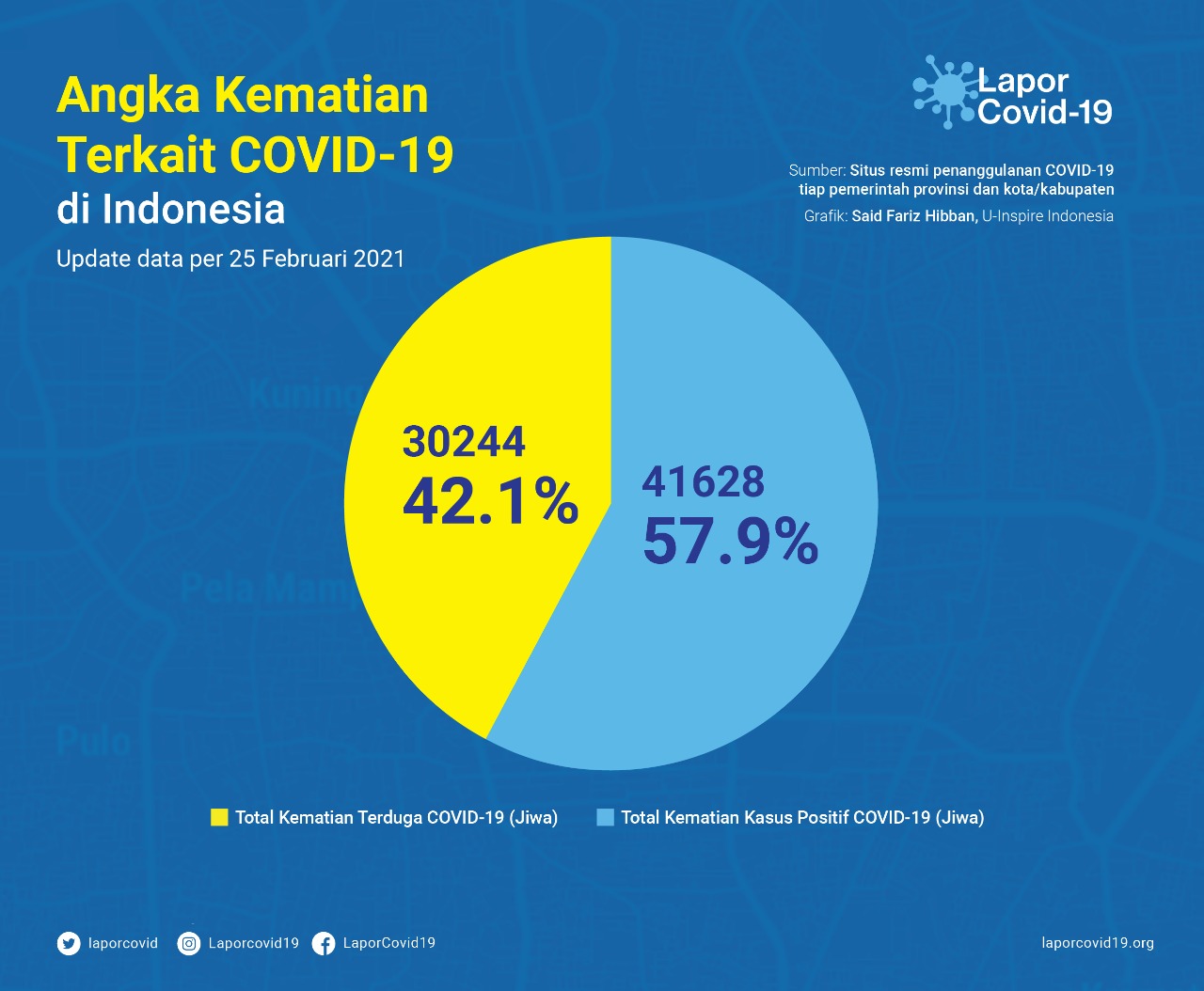
Data collected by LaporCOVID-19 volunteers from 514 districts/cities as of February 25 2021 shows that the number of fatalities with positive status in Indonesia has reached 41,682 people (note that there are still 171 district cities that have not been updated)[1]. Meanwhile, the number of fatalities announced by the Central Government through the Covid-19 Task Force as of February 25 2021 was 5,518 people. This means that there are 6,000 death data from districts/cities that have not been confirmed and announced by the Central Government. The number of fatalities in Indonesia could be even greater if you include victims who died with suspected COVID-19 status, which reached 71,872 people. This means that there are 30,244 fatalities (42.1%) that have not been announced by the Central Government.
[1] ctt: Regions that have not updated data as of February 25 include West Papua, Southeast Sulawesi, Bali and Riau, as well as a small number of districts/cities in each province. victims who died with suspected Covid19 status, which reached 71,872 people. This means that there are 30,244 fatalities (42.1%) that have not been announced by the Central Government.
Highest Deaths in Central Java
Data collected by LaporCOVID-19 shows that the highest number of deaths, whether only positive for Covid-19 based on PCR tests or accumulatively (including suspected Covid-19) is Central Java. Accumulatively, the number of fatalities in Central Java was 18,514. Next, DKI Jakarta has 15,588 people, followed by East Java with 13,749 people, West Java with 6,837 people and North Sumatra with 1616 people. The graph from three regions in Indonesia depicts the comparison of positive deaths (blue) and suspected deaths (yellow).
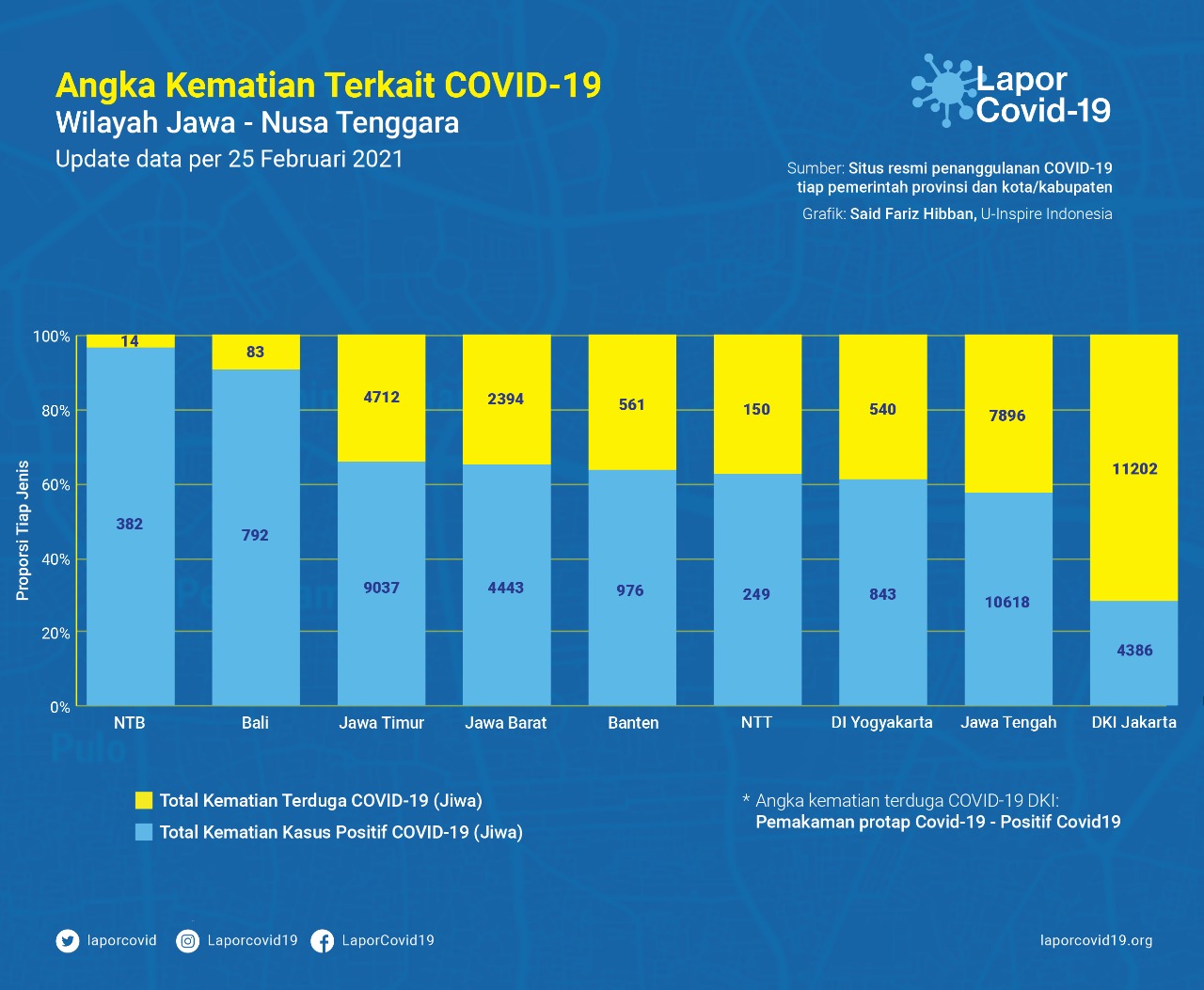
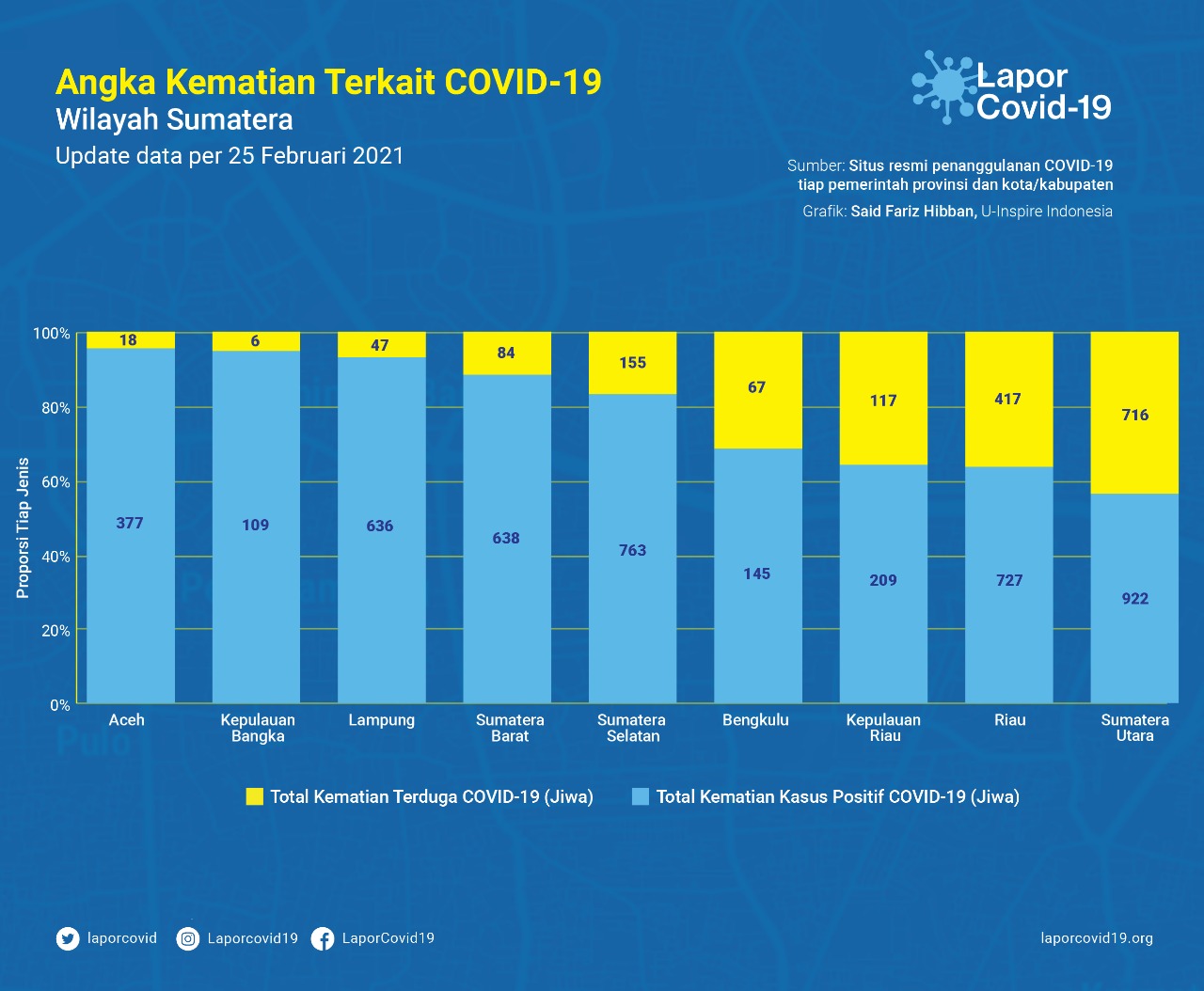
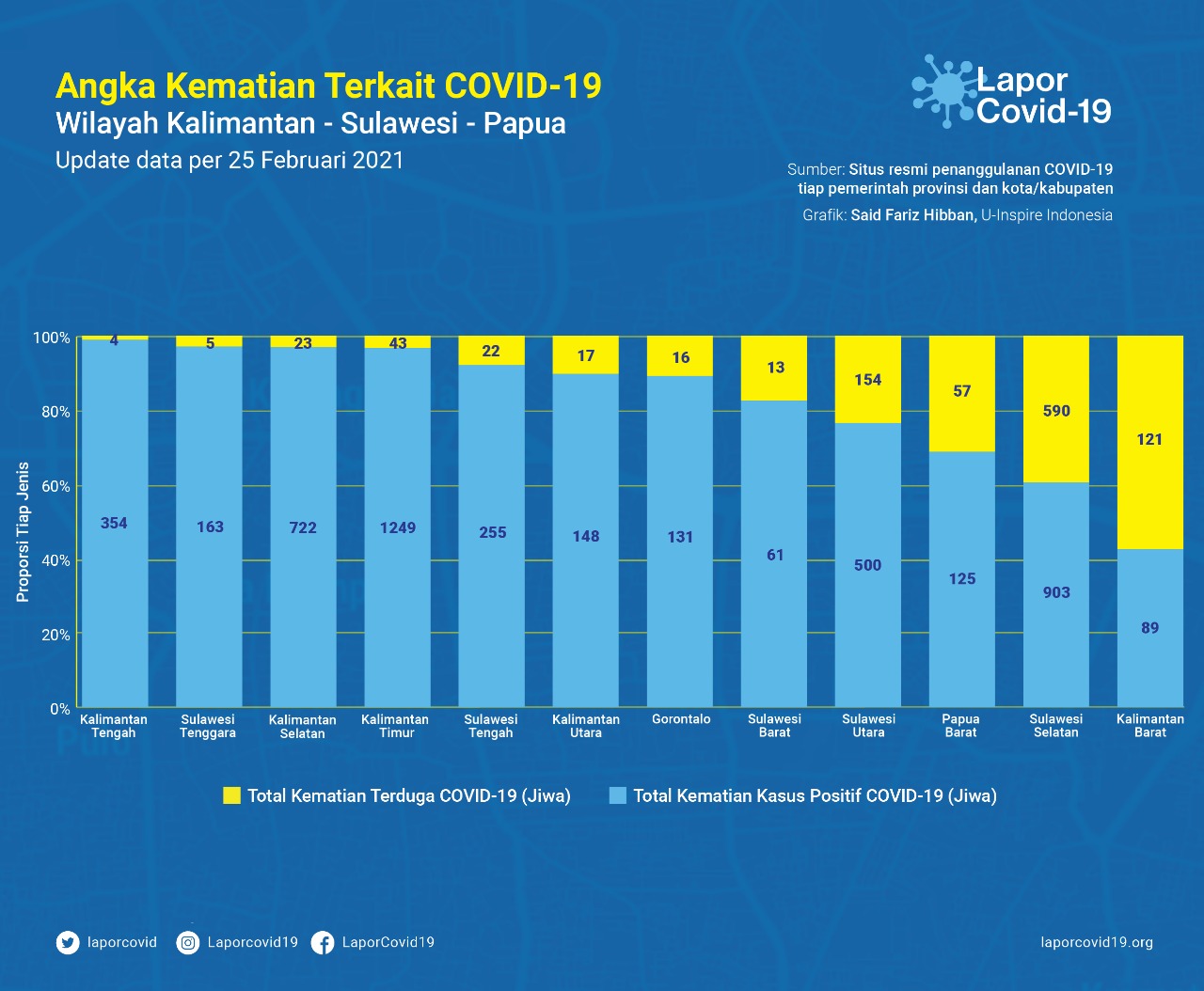
The gap between the Indonesian Ministry of Health's version of Covid-19 Positive Death Data and Regency/City data
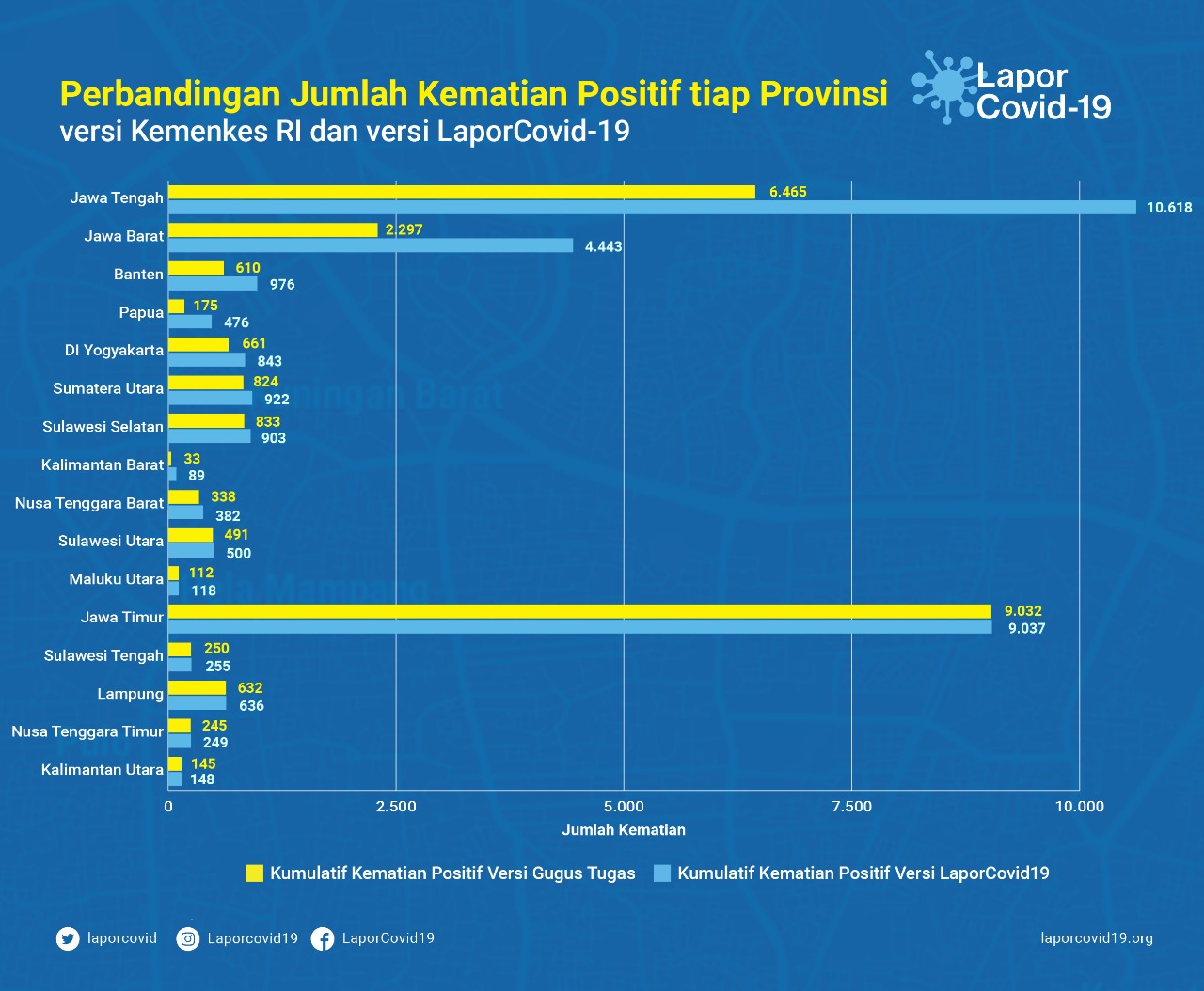
Previously, we saw that there was a big difference in the national death rate released by the Indonesian Ministry of Health and that found by LaporCOVID-19, which was around 6,000. This graph shows provinces that have differences in the number of positive deaths on February 25 2021, with the yellow bar being the figure from the Indonesian Ministry of Health and the blue bar being the district/city government's version of the figure collected by LaporCovid-19 volunteers. Based on this graph, it can be seen that the 5 provinces with the largest gap in positive Covid-19 death rates are Central Java at 4,153, followed by West Java province at 2,146, Banten at 366, Papua at 301, and DI Yogyakarta at 182.
This difference shows that up to a year of the pandemic, there has been no improvement in data governance. In fact, accurate and transparent data is not only needed as a basis for policy, but this is also really needed by the public to understand the pandemic situation better. Apart from increasing testing, tracing and isolation, improving data management is the government's homework which has not been carried out well after a year of this pandemic.
Contact Person:
Said Fariz Hibban
LaporCovid19 Analyst Data
6281527440489
Amanda Tan
Program Officer ReportCovid-19
+62 858-6604-4058
LaporCOVID-19 is a platform for fellow citizens to share information regarding the number of incidents related to COVID-19 around us. Bottom-up approach through citizen reporting or crowdsourcing so that every citizen can participate in conveying information about it
cases related to COVID-19.


